
Anchoring & chemical fixing
Post-Installed Rebar Anchoring
Deformed reinforcement bars bonded into existing concrete — hole and bar size matched, embedment set by design, and the bond developed in concrete that is already cured.
What this service covers
Post-installed rebar anchoring uses a two-part adhesive to set a deformed reinforcing bar into a drilled hole in existing concrete, so a new element — a starter bar, a slab extension, a wall or a column-to-slab connection — can be tied into concrete that has already been cast and cured. The drilled hole diameter is matched to the bar diameter through the particular system's data, and the embedment depth is matched to the bar, because the anchorage is developed by bond over the embedded length. The connection is only as good as the concrete around it: the cover, the condition and the strength of the existing concrete, and the accuracy of the drilling, all govern what the bar can carry. AKEN sets out, drills, cleans, injects and cures the bars to the system manufacturer's published data, and does not treat the work as a drilled hole with adhesive in it.
A post-installed bar is a lap made in material that was never intended to have one. In a cast-in connection the bar is surrounded by fresh concrete that flows around it and grips its ribs; here the concrete is removed by a drill, and the new bar has to develop its anchorage into whatever is left around the hole. The bond depends on the concrete — its condition, its cover and its strength — as much as on the adhesive, which is why this work belongs with structural work rather than with fixing work.
The diameter relationship is not guesswork. Each system publishes the hole diameter to be drilled for each bar diameter, and the anchorage length required for the loading and the bond condition. A hole drilled with whatever bit was on the machine, or a bar cut short because it fouled something, is outside the data and has no design basis at all. Drilling also risks cutting existing reinforcement, which is why the member is scanned first and the position is moved where there is a clash rather than drilled through regardless.
We work with systems from internationally recognised manufacturers — HILTI, fischer, Simpson Strong-Tie, MKT and Rawlplug are among those commonly specified and installed on Indian industrial sites, with the system and its approval governing the detail. None of them is the answer by default: the system, the hole diameter, the embedment and the design method all follow from the substrate condition, the application and the loading, the cover and edge distances available, any fire or approval requirement, and the manufacturer's published data and approval document for that specific product. AKEN is not an authorised dealer, distributor or certified installer for any of these manufacturers; the approval that governs the detail is the one issued for the system actually being installed.
Scope of work
What we actually carry out under this service. Anything outside this list is quoted as a separate line rather than absorbed into a lump sum, so you can see what you are paying for.
- Survey of the existing concrete — condition, cover, strength, cracks and any earlier repairs or carbonation
- Scanning for existing reinforcement and embedded services, and re-siting holes where a clash exists
- Setting out bar positions and anchorage lengths from the design, with the available cover and edge distance checked
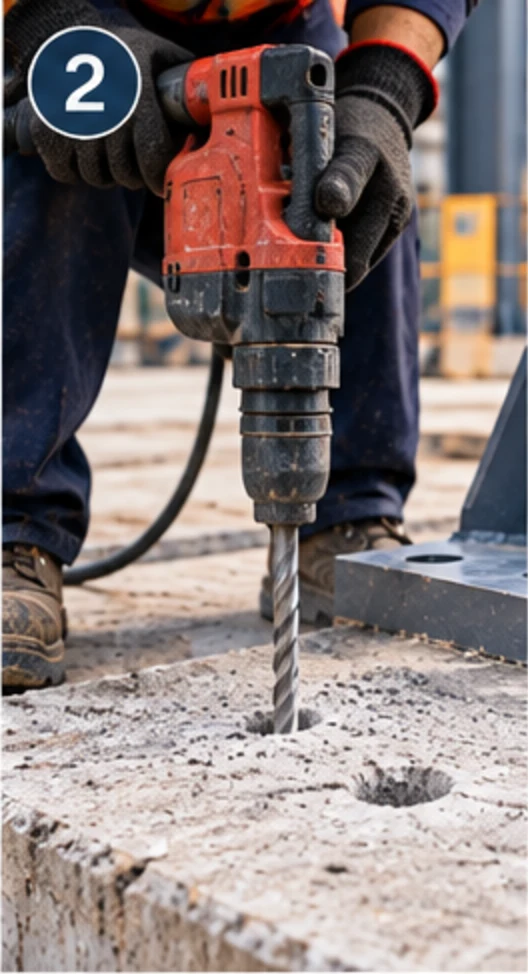
- Drilling to the hole diameter and depth the system specifies for that bar diameter
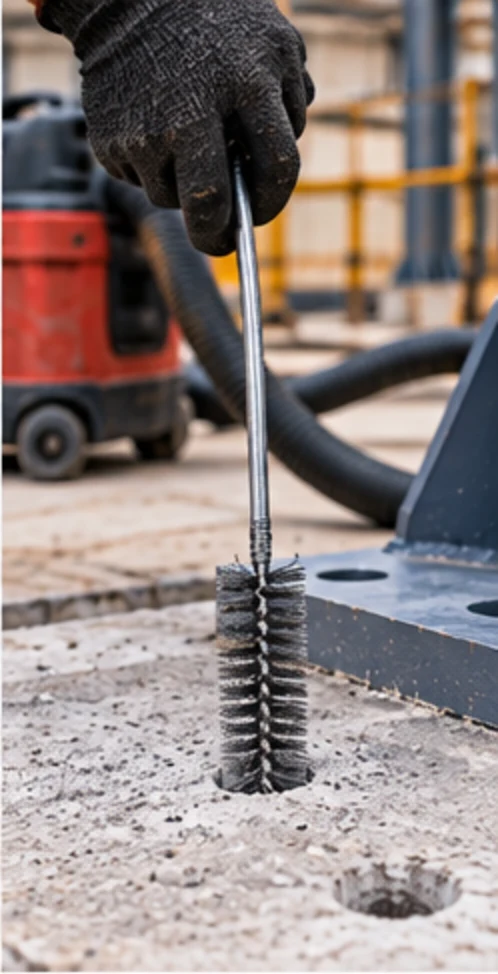
- Hole cleaning in the specified sequence, with the hole protected until injection
- Bar preparation — cutting to length, removing scale and oil, and marking the embedment on the bar
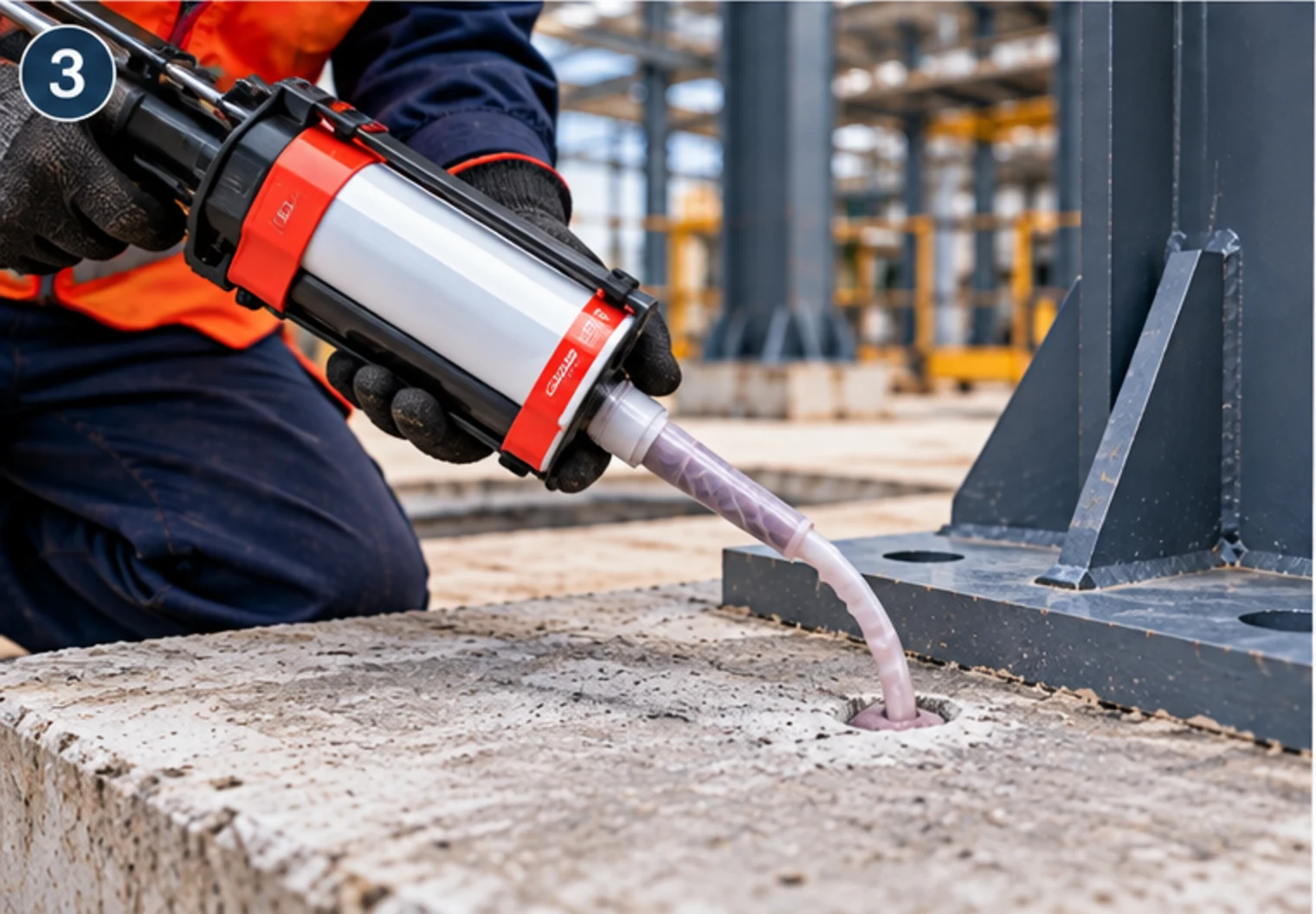
- Injecting adhesive from the base of the hole and inserting the bar to its marked depth
- Holding the bar in position and true while the adhesive gels, without disturbing it
- Protecting the projecting bar and respecting the full-cure time before it is loaded, tied or bent
- Recording bar and hole diameter, embedment achieved, product and batch, temperature and cure time, with pull-out testing where the design requires it
Technical capability
Materials, components and methods. Where a figure would be quoted, the governing factor is named instead — a diameter or a tonnage is a design outcome, not a catalogue item, and the number only means something alongside the loads behind it.
- Hole diameter
- Drilled to the diameter the system gives for that bar diameter — a matched pair from the approval, not an approximation from the nearest available bit
- Anchorage length
- Embedment set by the design and the system data for the bar diameter, the concrete condition and the loading, and checked during the work rather than assumed
- Bar preparation
- Deformed reinforcement in the grade the design covers, cut to length, degreased and marked so the embedment can be verified as the bar goes in
- Hole cleaning
- Brushing and blowing in the specified cycles, because dust on the hole wall means the adhesive bonds to dust and the anchorage is lost
- Injection
- From the base of the hole with the nozzle withdrawn as it fills, at the volume that hole size requires, so no void sits between bar and concrete
- Cure
- No loading, tying or bending until the full-cure time for the measured concrete temperature has elapsed, since a disturbed bar does not recover
- Concrete condition
- Cover, strength, cracks and repairs recorded, because the bond is developed in the existing concrete and not only in the adhesive
- Verification
- Pull-out testing on a sample where the design or the approving authority requires it, with results recorded against the position
How the work is executed
- 01
Survey and setting out
The existing member inspected for condition, cover and strength, scanned for reinforcement, and the bar positions set out with the anchorage length and available cover checked before a hole is drilled.
- 02
Drilling and cleaning
Hole to the system diameter and the depth that accommodates the anchorage length, drilled without cutting the existing bar, then brushed and blown in the specified cycles and plugged.
- 03
Bar preparation
Bar cut to the required projection plus embedment, cleaned of scale and oil, and marked at the embedment depth so the installed position can be checked rather than estimated.
- 04
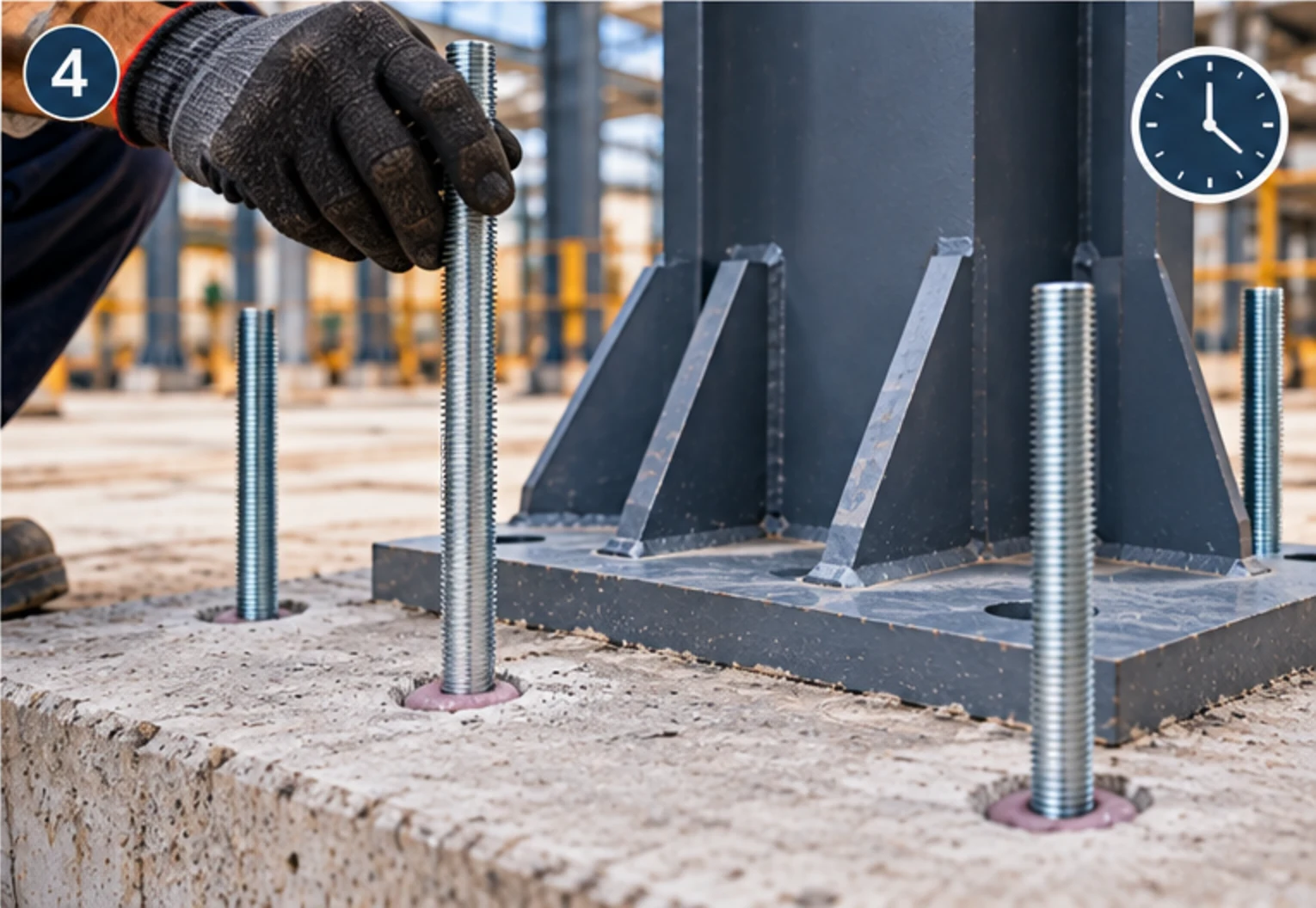
Injection, insertion and cure
Adhesive injected from the base, the bar inserted slowly to its mark and held true until the adhesive gels, with no load applied until full cure for the concrete temperature has passed.
- 05
Verification and handover record
Depths and projections checked, sampling tested where specified, and the record of bar size, hole size, embedment, product, temperature and cure issued with the completion documents.
The work, step by step
Illustrative images showing the sequence and the type of work involved. They are not photographs of a specific completed AKEN project — for those, see the project photographs.
01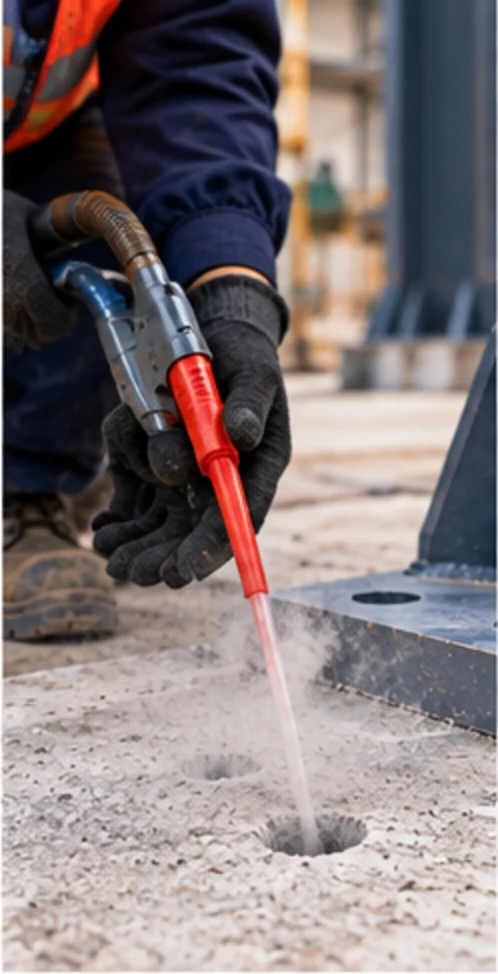 02
 03
 04
 05
Where this is used
We work for plant and procurement teams, EPC contractors and owner-operators across power, cement, mining, manufacturing, warehousing and infrastructure. Much of it is inside a running plant, which sets the terms of the job.
- Starter bars for new walls, columns and slab extensions
- Column-to-slab and beam-to-wall connections in retrofits
- Slab openings and infill panels tied back into the existing slab
- New equipment plinths and foundations dowelled into existing concrete
- Raker and bracing connections for structural strengthening
- Balustrade, handrail and edge protection starter bars
- Culvert, retaining wall and water-retaining structure extensions
Why AKEN
Design intent read before drilling
The anchorage length, the bar size and the hole size come off the design and the system data. A post-installed connection is not a hole with adhesive in it, and it is not drilled until the numbers are settled.
Hole and bar treated as a pair
The hole diameter is the one the system gives for that bar diameter. Anything else is outside the approval, however neatly it is installed.
Scanning before drilling
Cutting existing reinforcement to make room for a new bar is a change to the structure. Positions are moved instead, and the anchorage length available is rechecked when they are.
Cure protected and recorded
A bar tied or bent before full cure can lose its anchorage with no visible sign. Cure is planned into the programme and the temperature and timing are recorded.
Structural work, not fixing work
The work is resourced as structural work, with a design to work to, testing where required, and a record that an engineer or auditor can check afterwards.
Our safety controls are set out in full at site safety, including the photographs we withdrew because they showed unsafe work.
FAQ
Rebar Anchoring: questions buyers ask
Why is the drilled hole larger than the bar?
Because the bar has to be surrounded by adhesive, and the adhesive needs an annulus around it to develop the bond. Each system publishes the hole diameter for each bar diameter, and that pairing belongs to the product approval rather than to a rule of thumb. Drilling a hole the size of the bar, or one that a convenient bit happens to give, takes the fixing outside its data and leaves the design without a basis.
How deep must a post-installed bar be embedded?
To the anchorage length the design requires, taken from the system data for that bar diameter, concrete condition and loading. It is not automatically the same as the lap length used for cast-in bars, because a cast-in lap assumes fresh concrete flowing around the bar and curing against it. The depth is fixed before drilling, checked during the work, and not shortened because the drill met something.
Can any reinforcement bar be used for anchoring?
It has to be deformed bar in the grade that the design and the system data cover, clean and free of oil, loose scale and flaking rust that would sit between the bar and the adhesive. Some systems state the bar standards and grades they have been assessed with. A smooth bar or an unidentified offcut has no bond worth designing for, however good the adhesive.
Is a post-installed bar as strong as a cast-in bar?
It can be, but not by assumption. A post-installed connection develops its anchorage by bond in concrete that has already cured, so its capacity follows the system data, the concrete condition, the cover and the embedment, and it is designed as a post-installed connection rather than as a cast-in one. Where the design intent is to reproduce a cast-in lap, that has to be established from the system's assessment for that case.
Why does concrete cover matter so much here?
Because the bond is developed in the concrete around the hole, and the concrete between the hole and the surface has to resist being pulled away with the bar. Low cover, or cover reduced by a repair or a previous breakout, weakens that resistance and can govern the capacity instead of the bar or the adhesive. Edge distance at a slab or wall face is the same question in another direction.
What do you do if the drill meets existing reinforcement?
Stop and re-site the hole. Cutting reinforcement in a structural member is not a decision to be taken on site, and drilling immediately alongside a bar leaves the new hole with less concrete to bond against. The member is scanned before drilling, and a clash is resolved by moving the position and rechecking the anchorage length available — not by cutting the obstruction out of the way.
Does the cure time change with concrete temperature?
Yes. The adhesive cures by chemical reaction, which slows as the concrete gets colder, so both the gel time and the full-cure time come from the cartridge data for the temperature measured at the hole. Bars tied, bent or loaded before full cure can lose their anchorage permanently, and nothing about the finished fixing shows it. Cold slabs in winter and shaded plant rooms are where this is most often missed.
Can a post-installed bar be bent or welded after it is set?
Bending has to be allowed for before the bar goes in, because the anchorage length assumes the embedded portion stays straight, and bending a set bar can damage the bond. Welding a projecting bar puts heat into the adhesive, and not every system permits it. If either is likely on the job, it should be settled at design stage rather than discovered on site.
How is a post-installed rebar connection verified?
By the record and, where specified, by testing. The record covers the bar diameter, the hole diameter, the depth and embedment actually achieved, the product and batch, the cleaning method, the temperature and the cure time. Pull-out testing on a sample is asked for on many structural connections, and the results are recorded against the position so that a third party can check them later.
When is post-installed rebar the right choice rather than an anchor rod?
When the connection has to behave like reinforced concrete — a starter bar that will be bent into a new slab, a lap into a new wall, or a dowel that continues reinforcement across a joint. A threaded rod with a chemical anchor is a fixing; a post-installed bar is reinforcement, and the design, the embedment and the acceptance testing all follow from that difference. Which applies is settled by the structural designer.
Related services
Next step
Have an industrial project in mind?
Discuss your requirement with AKEN. Send the site location, the scope and the date you are working towards, and we will tell you what we need to quote it properly — usually a site visit, scheduled within 72 hours.
+91 82800 76864 · contact@aken.firm.in